

If room type distribution analysis hasn’t been a part of your strategy yet, a few ideas below might help you get started. By making slight changes to pricing, content, and availability for room category, small adjustments can help match demand with value.
WHY ROOM TYPE DISTRIBUTION MATTERS
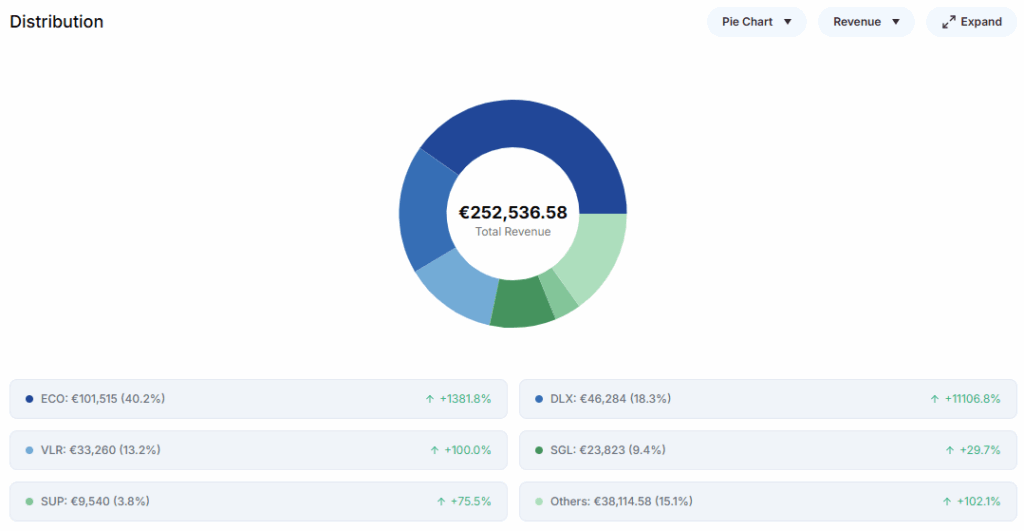
Analyzing the sales of different room types across various market segments or booking channels, while filtering data by the number of rooms sold, room revenue, and Average Daily Rate (ADR), can reveal significant patterns. This analysis helps identify both the best and worst performing markets or channels, as well as those with the highest and lowest performance deviations. Here are the metrics worth tracking:
- Room category booking trends across different channels
- Segment-specific room rate performance
- Opportunities for yield optimization through inventory positioning
This type of analysis enables you to transition from merely reacting to past performance to actively influencing future results.
HOW TO INTERPRET THE DATA – SCENARIOS WORTH EXPLORING
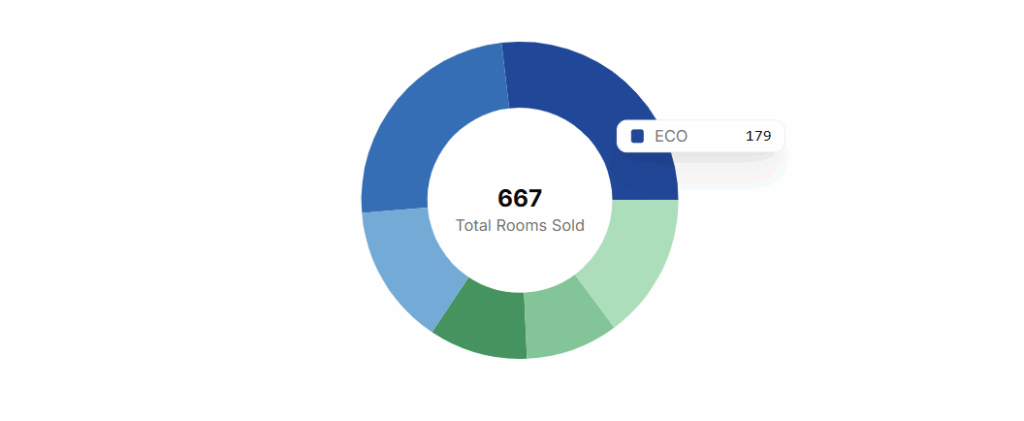
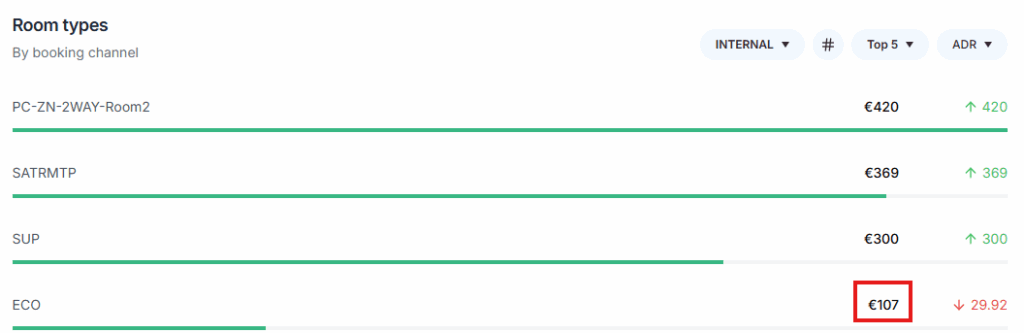
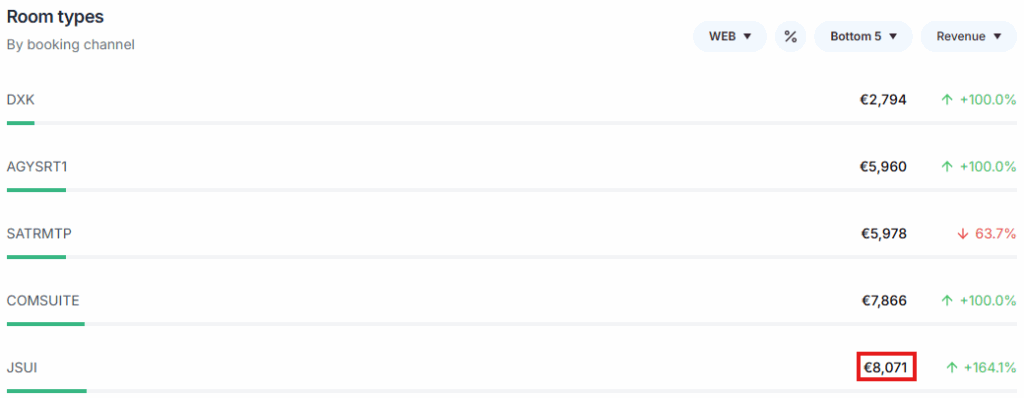
Example #1 – Your data shows that for the upcoming period, your hotel website primarily sells economy rooms, which are the cheapest ones, more than other room types. To capitalize on this finding and increase revenue during that period, consider limiting the availability of economy rooms while promoting other, higher-priced room categories. By using appropriate analytics tools, you can monitor the results of these changes to see if there is a shift in room distribution.
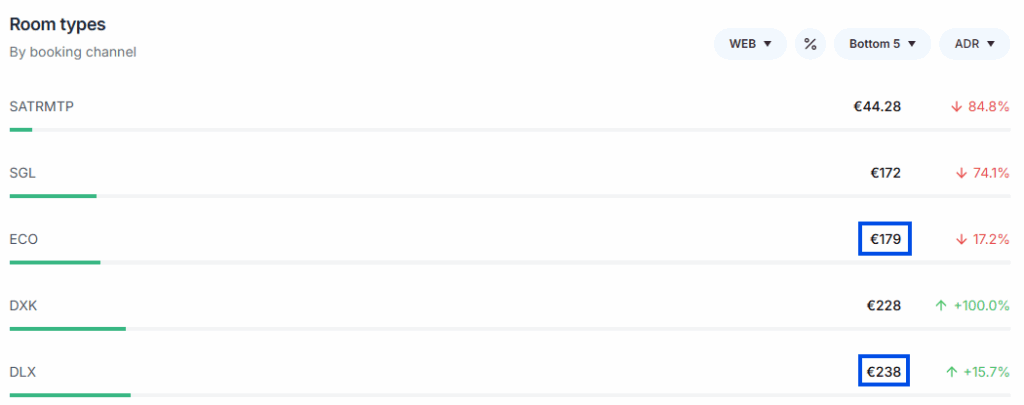
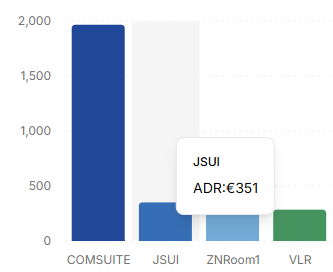
Example #2 –You might find that sales of suites on your hotel’s website are underperforming. By comparing suite prices to those of other room types that are performing better through this channel, you may discover that a slight price adjustment or the addition of extra benefits for guests could encourage more suite bookings. Such changes could directly boost your total revenue. As in the previous example, you can measure the impact of these activities on your key performance indicators within a day or two.
THE SIGNIFICANCE OF HISTORICAL AND FUTURE DATA
The historical data you gather simplifies reporting and provides a solid foundation for planning. Reviewing last month’s statistics helps identify which markets, channels, and room types performed best or worst. By incorporating future data tracking, along with its daily and monthly variations, you’ll gain a comprehensive overview of the necessary metrics to adjust sales and marketing strategies and optimize daily operations for maximum hotel opportunities. Furthermore, “on-the-books” (OTB) future data allows you to proactively influence upcoming results by providing valuable predictive insights. Observing future booking patterns by room type enables you to make timely strategic adjustments to availability, pricing, or marketing efforts.
QUESTIONS FOR STRATEGIC THINKING
Consider these analytical approaches:
- Which room types generate the best results across each distribution channel?
- Where do you see gaps between available inventory and booking patterns?
- What does forward booking data indicate about upcoming opportunities?
- How could strategic inventory management impact upgrade potential?
The most effective revenue strategies combine robust data analysis with careful planning. Properties that consistently maximize performance often share certain practices, such as detailed analysis of room type performance across all channels, using forward-looking data for informed decision-making, and viewing each room category as a revenue opportunity.
Room type distribution analysis can provide valuable insights that improve your existing revenue management efforts. The data you need is likely already within your systems; you just need to understand the right questions to ask and how to act on the answers.
If you are ready to explore what your room type data might reveal, check out our platform, Elarion Insights, and get to know your data on a whole new level.